Saudi Arabia has shut a critical oil pipeline. Here’s why it matters for the global oil market
Yet another contingency plan for the global oil market – buffeted by more than six months of war between the United States and Iran – has come under serious threat.
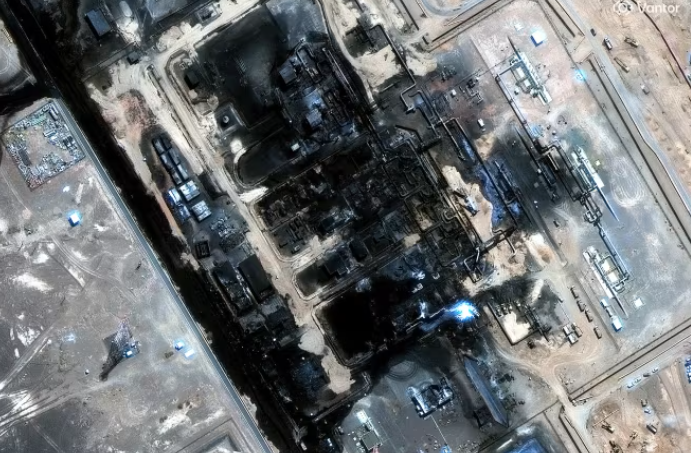
On Friday, Saudi Arabia announced that it had shuttered its East-West Pipeline, blaming drone attacks from inside Iraq that it said had caused “injuries and some damage.”
No group has claimed responsibility, but US President Donald Trump has pointed the finger of suspicion at Iran-backed proxy groups operating inside Iraq. Iran’s foreign ministry “categorically denied” the accusation on Monday.
The East-West pipeline – running to the Red Sea port of Yanbu and feeding Saudi coastal refineries – has proved critical in re-routing millions of barrels of Saudi crude from the Persian Gulf during the war. As much as 4% of the world’s oil supply could be taken offline because of the pipeline’s closure, according to a note by Capital Economics published Monday.
The shutdown, which could last for weeks – the extent of the damage is not yet clear – is aggravating an already tough situation for the global oil market.
Last week, Iran-backed Houthi rebels in Yemen captured the Red Sea port city of Mocha and Perim, an island located at the mouth of the Bab al-Mandeb strait – a narrow waterway that has, for months, functioned as a backup to the Strait of Hormuz, allowing for the export of Saudi oil and refined products.
The combination of the Houthis’ tightening grip over shipping in the Red Sea and Friday’s pipeline closure have ignited fears that the main escape valves for the region’s oil are slamming shut. Brent crude futures, the global oil benchmark; and WTI, the US benchmark, both rose more than 3% on Monday to $108 and $103 a barrel, respectively.
“It would be truly calamitous if the East-West pipeline cannot be repaired and brought on stream soon,” Bob McNally, president and co-founder of Rapidan Energy Group, told CNN. “It is by far the most important route by which Saudi Arabia was able to redirect crude flows.”
Critical pipeline
Despite soaring prices, the oil market has proved remarkably resilient during the war; some oil has managed to escape the Strait of Hormuz, some countries have ramped up production and many have drawn from their strategic reserves. In addition, global demand for oil has fallen.
Still, much of that resilience can be credited to the workaround offered by the East-West Pipeline.
The pipeline has, on average, pumped roughly 6 million barrels a day of crude over the course of the war, shy of the 7 million-a-day it can pump at full capacity, according to Richard Bronze, co-founder of Energy Aspects.
It has two uses, he said: pumping barrels of crude for export and supplying refineries along Saudi Arabia’s west coast which, in turn, export oil products like diesel.
Source: CNN