How the Iran War Is Disrupting Gulf Economies: 5 Key Effects.
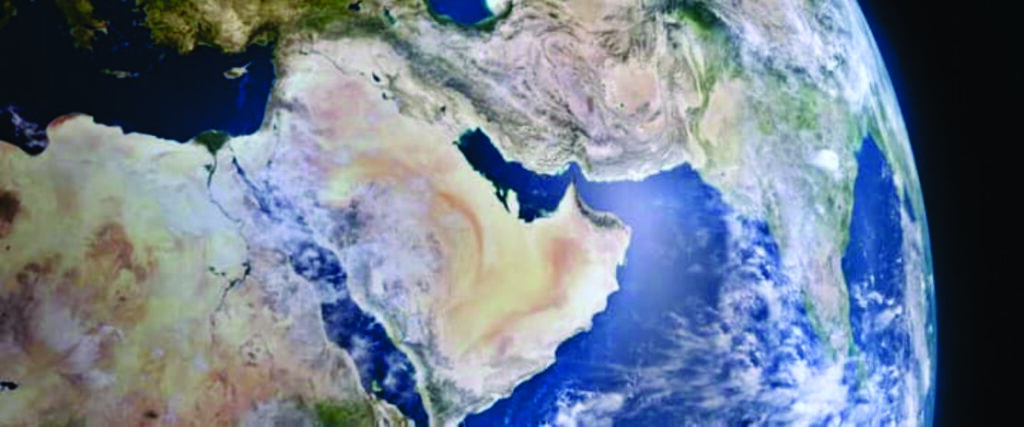
On Wednesday, the United States and Iran agreed to a two-week ceasefire, pausing the 42-day military campaign by the U.S. and Israel against multiple Iranian military and civilian targets. The Pakistan-brokered deal is, however, already being severely tested: whereas direct U.S. strikes on Iran have stopped, Israel and Hezbollah in Lebanon have continued fighting, with Israel maintaining that Lebanon is not part of the ceasefire, while Iran insists that continued Israeli strikes violate the agreement. Meanwhile, traffic through the Strait of Hormuz remains at a near-standstill despite the ceasefire being contingent on the immediate reopening of the critical maritime chokepoint.
The final outcome of the conflict currently hangs in the balance, with the lack of a discernible common ground for reaching long-lasting peace as well as mutual distrust between the warring sides making for a murky situation. As expected, Middle Eastern countries have borne the full brunt of the war, with a barrage of drones and missile strikes severely damaging military sites as well as critical civilian and economic infrastructure. Here are some of the most damaging effects of the war that Gulf Cooperation Council (GCC) economies have to contend with.
#1. Disruption of Energy Exports & Shipping
Multiple, targeted attacks on commercial vessels by Iran led to the de facto closure of the Strait of Hormuz in early March, halting a massive portion of oil and LNG tankers and leading to the declaration of force majeure by many energy companies. StanChart estimates that the war has led to a reduction of global oil flows by ~8 million barrels of crude per day, with Saudi Arabia alone losing 700 kb/d in pipeline flows
The conflict has also resulted in skyrocketing logistics and insurance costs. War-risk insurance premiums for ships sailing in the Persian Gulf have surged by up to 1,000%, with some high-risk cases seeing rates spike up to 7.5%–10% of vessel hull value per transit from 0.20%–0.25% of a vessel’s value before the war. This means that a tanker worth $150 million could face an insurance bill of up to $7.5 million for a single trip through the Strait of Hormuz, up from a few hundred thousand dollars.
#2. Destruction of Energy Infrastructure
The Iran conflict has severely impacted Middle Eastern energy infrastructure, with attacks targeting oil, gas, and industrial sites across the region, causing billions in potential damage and disrupting exports. Iranian missiles hit LNG facilities in Qatar’s Ras Laffan industrial hub, causing extensive damage to sites, including a Shell Plc (NYSE:SHEL) plant and forcing force majeure declarations.
Saudi Arabia’s Ras Tanura Oil Refinery, one of the world’s largest refining complexes, was forced to temporarily halt operations after debris from drones caused fires in early March. An Iranian attack on the East-West Oil Pipeline (Petroline) in Saudi Arabia on Wednesday morning just hours after a fragile two-week ceasefire was announced, targeted a critical pumping station, dramatically cutting the kingdom’s oil flows. The 1,200-km pipeline is a critical artery that bypasses the Strait of Hormuz.
Meanwhile, operations at the United Arab Emirates’ Habshan natural gas processing facility were suspended following drone/missile attacks, while significant damage was reported at the Khalifa Port industrial zone, including Aluminum Plants. Operations at Iran’s Rumaila oilfield were halted for security reasons. Israel responded by targeting Iran’s South Pars gas field facilities, causing major production halts.
The war has also caused extensive damage to critical non-oil infrastructure across the region. Giant desalination plants, which provide up to 90% of fresh water for countries like Qatar, Bahrain, and Kuwait, have been damaged or targeted, while US-Israeli airstrikes have damaged bridges, railway lines (including near Qom and Kashan), and major highways, such as the route linking Tabriz to Tehran. Major regional transport hubs have sustained damage, including Dubai International Airport, Abu Dhabi International Airport, Kuwait International Airport, and the Bahrain International Airport. Thousands of civilian locations, including residential areas, schools, and hospitals in Iran, have been hit, with reports indicating over 20,000 buildings have sustained damage.
#3. Economic Recession and Reduced Investment
GCC countries are facing economic meltdowns, with severe hits to tourism and business confidence thanks to the ongoing conflict. Gulf nations now have to contend with slowed economic growth or recession risks, with Kuwait and Qatar potentially facing up to 14% contractions in GDP due to blocked oil exports and infrastructure attacks. Saudi Arabia and the UAE are expected to see smaller but still significant GDP drops of approximately 5% and 3%, respectively, as they can partially reroute some oil flows. Regional stock exchanges have tumbled, with Dubai’s market experiencing a 15% drop and markets in Abu Dhabi and Qatar falling by 5% to 10%. Meanwhile, the cost of insuring against default (credit default swap spreads) has risen sharply for Bahrain and Dubai.
The regional travel and tourism industry is losing an estimated €515 million ($600 million) per day, with total visitor spending losses for the region projected to reach between $34 billion and $56 billion in the current year. Overall, the conflict is projected to cost GCC nations nearly $200 billion in lost economic output due to contracting growth, reduced oil exports and sector disruptions, with regional oil revenue losses estimated at $1.1 billion per day.
#4. Security Threats and Soaring Casualty Rates
The United States’ Operation Epic Fury, aka the Second Iran War, has triggered a severe regional security crisis, with heavy casualties reported across multiple countries. Over 2,076 people were reported killed in Iran by mid-March, and more than 26,500 were injured by U.S.-Israeli strikes, while another ~1,500 people have been killed in Lebanon and over 4,600 were injured. Thirteen American soldiers have lost their lives, and hundreds of others have been injured in the war, while 26 Israeli soldiers have been killed and over 7,400 injured. Up to 3.2 million people have been internally displaced in Iran, and over 1 million in Lebanon.
Not surprisingly, there is an unfolding humanitarian crisis in the region, with the destruction of 442 health facilities in Iran, including the destruction of the Pasteur Institute and Tofigh Darou pharmaceutical facility, halting vaccine production and causing severe medical shortages. Access to humanitarian aid remains a challenge, with many aid convoys, particularly in southern areas, denied access. The conflict has disrupted essential supplies, including fuel and fertilizer, prompting warnings of a broader regional food security crisis.
Source: Oilprice