China uses Africa to expand rare earth dominance as US seeks upper hand over key shipping routes, including Strait of Hormuz.
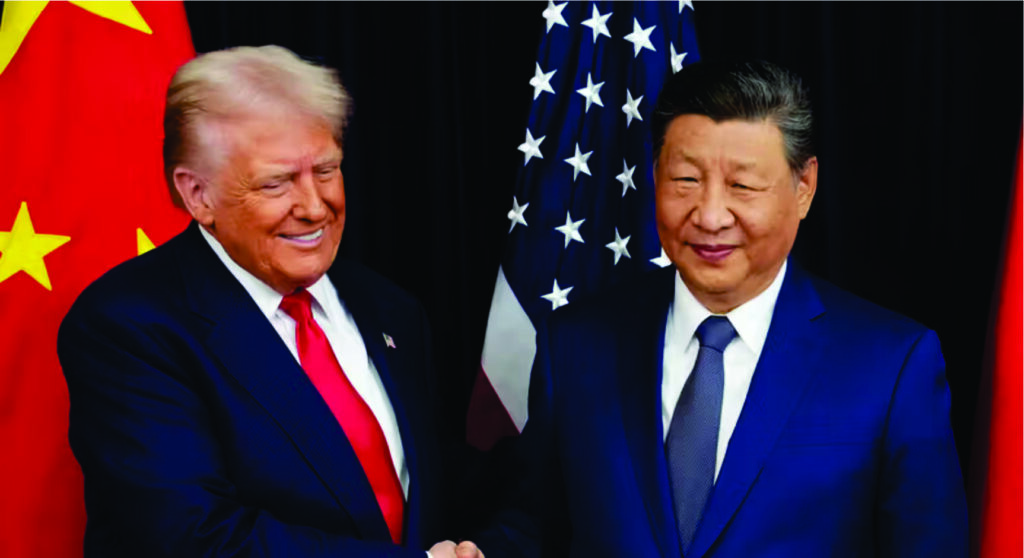
The United States has moved to strengthen its influence over key routes such as the Panama Canal and the Strait of Hormuz, and is now seeking broader access for American military aircraft through Indonesian airspace near the Strait of Malacca.
Data shows that much of China’s energy supply moves through vulnerable sea routes, with roughly 45–50 percent of its crude imports transiting the Strait of Hormuz, where U.S. military operations and enforcement measures targeting Iranian exports have disrupted tanker movements, including vessels supplying Chinese buyers.
A large share of the remainder passes through the Strait of Malacca, where an estimated 60–80 percent of China’s oil imports flow.
Disruptions along these routes are delaying deliveries, raising costs and slowing Chinese manufacturing, while a prolonged U.S. blockade could cut off supply and have far-reaching economic effects.
The push by Washington to secure these chokepoints comes as China steps up the use of export controls.
The measures is seen as a signal to President Donald Trump, who is expected to visit Beijing in mid-May, and other global leaders that China holds an advantage in critical minerals and is ready to respond to any attempts to limit its access to markets, technology and key industrial inputs.
China strengthens African mineral foothold
China’s leverage is driven by its dominance in rare earths and critical minerals, with supply chains increasingly linked to resources from Africa.
Beijing has expanded its presence across the continent through a series of investments in strategic mining assets. These include control of Tanzania’s Ngualla rare earth project following a 2025 deal involving Peak Rare Earths.
The Chinese-backed transaction, valued at about $150 million, edged out a higher competing offer of roughly A$240 million (about $160 million) from U.S. asset manager General Innovation Capital Partners, effectively giving Beijing control of one of the largest rare earth deposits outside China.
The project is expected to produce about 37,200 tonnes annually for two decades, supplying inputs for magnet production and electric vehicle supply chains.
China has also secured stakes in key African assets, including Botswana’s Khoemacau copper mine, Mali’s Goulamina lithium project, major mining operations in the Democratic Republic of Congo and lithium processing investments in Nigeria.
Chinese electric vehicle maker BYD has locked in access to six African lithium mines to guarantee supply through 2032, reinforcing Beijing’s upstream control of battery minerals.
Control of the full supply chain
Industry data indicates that China’s advantage extends beyond mining into control of the full supply chain.
Chinese companies are taking stakes at the exploration or early feasibility stage, securing joint ventures and long-term offtake agreements that lock in future supply.
State-backed lenders are financing projects that often struggle to attract Western capital, with Belt and Road-linked mining loans reaching about $24.9 billion in the first half of 2025, while construction is typically handled by Chinese engineering contractors.
Chinese electric vehicle maker BYD has locked in access to six African lithium mines to guarantee supply through 2032, reinforcing Beijing’s upstream control of battery minerals.
Control of the full supply chain
Industry data indicates that China’s advantage extends beyond mining into control of the full supply chain.
Chinese companies are taking stakes at the exploration or early feasibility stage, securing joint ventures and long-term offtake agreements that lock in future supply.
State-backed lenders are financing projects that often struggle to attract Western capital, with Belt and Road-linked mining loans reaching about $24.9 billion in the first half of 2025, while construction is typically handled by Chinese engineering contractors.
Source: Africabusinessinsider