Could Brazilian oil emerge as one of the big winners of the Iran war?
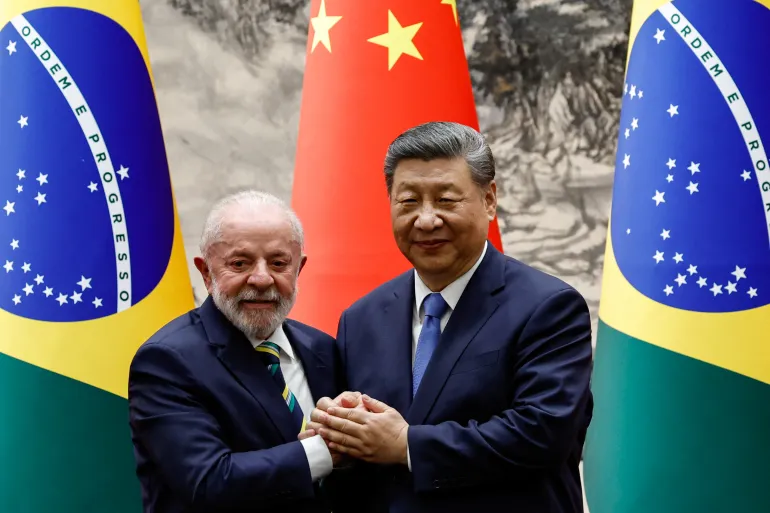
China and India are increasingly turning to Brazil to make up for lost oil supplies as the fallout from the US-Israel war on Iran continues to disrupt energy trade through the Strait of Hormuz.
With oil harder to access and Russian supply largely constrained by sanctions, Asian buyers are scrambling for crude from suppliers seen as safer and more reliable.
Brazil, which is already one of the world’s biggest oil exporters, has emerged as one of the clearest beneficiaries.
Sumit Ritolia, a specialist in modelling refinery and oil markets at Kpler, told Al Jazeera: “The disruption caused by the Iran war and the closure of the Strait of Hormuz has increased the importance of Brazil as a marginal crude supplier to Asia.”
“China and India in particular have increased purchases of Brazilian crude to secure barrels that are not exposed to Gulf shipping disruptions,” he added.
Analysts say Brazil cannot replace the Middle East as Asia’s main oil supplier. However, as shipping risks rise in the Gulf amid Iran’s effective closure of the Strait of Hormuz and the corresponding naval blockade on Iranian ports by the United States, its oil has become increasingly attractive to refiners seeking to avoid supply shocks.
Asian countries imported about 1.2 million barrels per day (bpd) of crude from Brazil in 2025, according to data supplied to Al Jazeera by trade intelligence firm Kpler. That rose to roughly 1.8 million bpd between January and May this year, highlighting Brazil’s growing role in Asia’s efforts to diversify away from the Gulf.
How much more oil is Brazil exporting?
Brazil had already been increasing oil production in major offshore developments before tensions escalated in the Middle East.
According to Kpler data, Brazil was producing about 3.77 million bpd of oil in 2025. Between January and May, this rose to an average of 4.06 million bpd, with 4.11 million bpd in May.
But Ritolia said the increase is not just down to a rapid wartime production surge.
“Since March 2026, Brazil’s production has increased only marginally by around 50,000 to 100,000 barrels per day, indicating limited short-term flexibility to rapidly ramp up supply in response to global disruptions,” he said.
The real difference is where its oil is going, he explained.
Petrobras, Brazil’s state oil company, has increasingly redirected exports towards Asia, where refiners are paying more for crude that does not pass through the Gulf.
More than 60 percent of Petrobras exports are now heading to China, while exports to the US have reportedly fallen to zero from about 60,000bpd in March, according to oilprice.com.
The shift is beginning to benefit Brazil’s economy. The OECD reported in March that rising crude prices are expected to support Brazil’s trade balance, while the country’s Ministry of Finance estimates that Brent crude reaching $100 per barrel would generate revenue equivalent to almost 1 percent of gross domestic product (GDP) above current 2026 budget projections.
Who is buying more Brazilian oil?
Demand from China is driving much of the increase in Brazilian exports, with Chinese imports of Brazilian crude averaging about 1.316 million bpd between January and May this year, compared with about 704,000bpd in 2025, according to Kpler data.
In dollar terms, official data compiled by the Brazil-China Business Council shows that the value of Brazil’s crude exports to China surged by almost 95 percent to $7.2bn in the first quarter of this year.
Meanwhile, India has also sharply increased purchases, with its imports averaging about 238,000bpd between January and May, up from roughly 100,000bpd in 2025, according to Kpler. In April, Brazil became India’s fourth-largest crude supplier.
Source: Aljazeera