BRICS+ study backs cross-border payments network over common currency
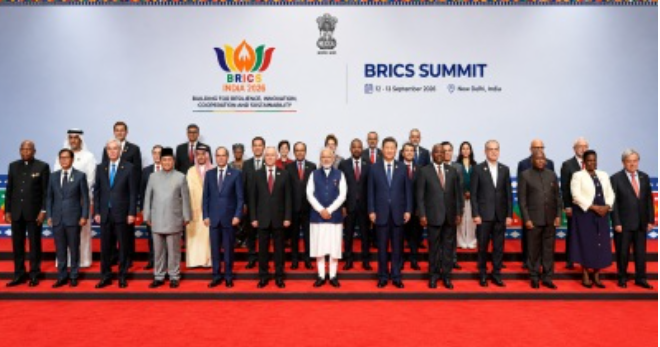
BRICS+ countries could establish a joint cross-border payments system to reduce reliance on the US dollar, but a common currency faces substantial economic and institutional barriers, according to a new study by economists Gregory Chin, Danny Quah and Jim O’Neill.
The report, A BRICS+ Currency and Payments System: Feasibility and Consequences, commissioned by BRICS+ Thinking, appeared online on October 30 ahead of its November 2026 publication date. It urges governments and central banks to connect national payment infrastructure and expand local-currency settlement.
“The initial prognosis for the possibility of a BRICS+ currency is not hopeful,” the authors concluded, citing divergent economic structures, geographic dispersion and reluctance to surrender monetary-policy autonomy.
A fully fledged common currency would require open capital accounts, full convertibility and a joint monetary authority. Less ambitious arrangements, such as shared units of account or wholesale settlement instruments, could operate without replacing national currencies or central banks. The authors argued that expanding local-currency payments was “quite feasible, unlike launching a shared currency”.
Competing currency and payment proposals
The study examines five initiatives: the R5 and UNIT currency proposals, alongside BRICS Pay, BRICS Bridge and BRICS Clear.
The R5 envisages a shared unit of account based on a basket of BRICS currencies. Former New Development Bank vice-president Paulo Nogueira Batista Jr has proposed using such a unit to denominate bonds and loans, potentially creating a pathway towards a shared reserve currency.
The UNIT is a separate proposal for a digital wholesale settlement instrument backed by 40% gold and 60% BRICS+ national currencies. Designed for institutional rather than retail payments, it has undergone trials but has not received official endorsement. Its reliance on Western-based data providers and blockchain infrastructure has also attracted criticism.
BRICS Pay aims to connect existing national payment networks for retail and business transactions, while BRICS Bridge focuses on central bank digital currency settlement and BRICS Clear on securities transactions. Despite progress on prototypes and pilots, no unified BRICS-wide payments network is operational.
In a July 2025 interview cited by the study, BRICS Pay chairman Andrey Mikhailishin described the consortium-led project as “not revolution, it is evolution” but acknowledged that there was “still a lot of work to do”. Western sanctions remain a major obstacle to connecting Russian banks with international card networks operated by Visa (NYSE:V) and Mastercard (NYSE:MA).
“All of the top banks in Russia are under sanctions,” Mikhailishin said, explaining why some of the country’s largest lenders could not participate directly.
The report considers the technological challenges facing BRICS Pay and BRICS Bridge surmountable, although sanctions, regulatory restrictions and differences between participating governments remain obstacles to implementation.
The consortium-led BRICS Pay project is distinct from the official BRICS Cross-Border Payments Initiative, although its organisers have coordinated with government and central-bank representatives. BRICS members agreed in September to continue studying payment interoperability without committing to a unified platform.
India has confirmed that no common BRICS currency proposal is currently under formal consideration. “There is no proposal in the BRICS for a BRICS currency as of now,” Foreign Ministry Secretary for Economic Relations Sudhakar Dalela said on September 12.
Brazil likewise declined to advance a common currency during its 2025 presidency, although President Luiz Inácio Lula da Silva has supported exploring a shared reference currency.
African members pursue practical alternatives
The debate has particular significance for African BRICS members South Africa, Egypt and Ethiopia, alongside partner countries including Nigeria, where businesses face high cross-border transaction costs and foreign-exchange constraints.
At the Russia-Africa summit in Moscow on October 28-29, President Vladimir Putin urged African governments to expand local-currency settlement and connect their banks with alternative payment infrastructure.
Putin claimed that roubles accounted for up to 85% of payments in Russia’s trade with Africa, a figure that has not been independently verified, IntelliNews reported. Moscow is exploring links with the Pan-African Payment and Settlement System (PAPSS).
Source: Intellinews