China’s Near-Record Trade Surplus Conceals a Front-Loaded Export Boom Already Fading
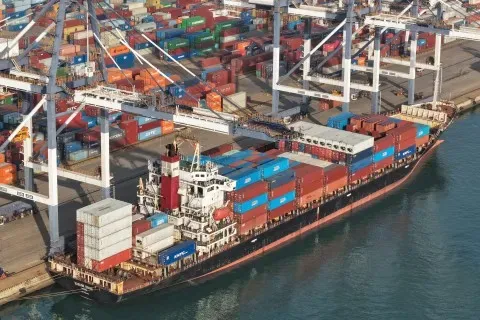
The trade figures Beijing released on October 14 were striking by almost any standard. China’s exports surged 36.3 percent year-on-year in September — the fastest monthly pace since February — as global demand for artificial intelligence infrastructure drove semiconductor shipments up more than 108 percent in value terms through the first nine months of the year. The result was a $133.53 billion trade surplus: the second-largest monthly figure in China’s recorded history, trailing only the $137.9 billion peak hit in January 2025.
A September Sprint Built on Borrowed Orders
Behind those numbers lies a dynamic that complicates the bullish read. A substantial portion of September’s surge reflected front-loading — importers in the United States and Europe pulling orders forward before new tariff deadlines took effect. Total exports reached $447.2 billion while imports came in at $313.7 billion, a gap that reflects China’s deepening role in global technology supply chains more than any recovery in underlying domestic demand. Once the tariff windows closed, the advance purchasing that turbocharged September’s figures disappeared with them.
China’s cumulative trade surplus for the first nine months of 2026 reached $938.1 billion, placing Beijing on course to exceed the $1.189 trillion annual record posted in 2025. Pressure from Washington and Brussels for China to address persistent industrial overcapacity has so far failed to dent that trajectory — U.S.-bound shipments surged nearly 40 percent year-on-year in September alone, even as the two sides maintained a tariff truce covering $60 billion in goods.
October’s Data Will Reveal What’s Real
The October trade report, scheduled for release November 10, has become the defining data point for the fourth quarter. China’s official manufacturing purchasing managers’ index fell to 49.3 in October, sliding back into contraction territory after September’s rebound, signaling that factory activity softened once the front-loading impulse faded. Current analyst forecasts suggest October’s surplus will remain broadly elevated — pointing to a more moderate deceleration than some early projections indicated — but any sharper divergence downward would expose how much of September’s boom was real demand versus a tariff-driven borrowing of future orders.
With China’s bilateral surplus with the EU heading toward a fresh annual record, Brussels issued a clear message through the summer: deliver tangible results by October or face unilateral action. On October 9, EU Trade Commissioner Maroš Sefčovič announced in Beijing that China had agreed to cut its hybrid vehicle shipments to the bloc by half — a deal reached after two days of talks with Chinese Commerce Minister Wang Wentao that also covered rare earth export licensing and improved EU market access in China.
The pressure behind that deal was real: Chinese passenger car exports surged 64 percent year-on-year in September to roughly 919,000 units, imposing structural strain on European manufacturers. Sefčovič described the outcome as “a crucial first step, but only a first step.” Denis Redonnet, the EU’s chief trade enforcement officer, had framed the bloc’s stance earlier in the year, warning that “dialogue alone will not suffice.” Germany — historically Beijing’s most reliable ally within the EU — has since moved toward supporting broader defensive trade instruments, a shift that is quietly rebalancing power within the bloc on China policy.
Export Redirection and the Critical Materials Lever
Facing coordinated pressure from its two largest trading partners, China has aggressively redirected its export flows. ASEAN emerged as its largest export market by a wide margin in September, with shipments to the region climbing more than 52 percent year-on-year to $81.7 billion. Southeast Asia has absorbed over $20 billion in Chinese clean-tech products in 2026, up roughly 50 percent, led by electric vehicles, batteries, solar panels and grid equipment — the fastest-growing segment of China’s outbound trade.
China’s export mix has also shifted structurally upmarket. Electric vehicles, lithium batteries and wind turbines have all posted strong gains through the first three quarters of 2026, marking a deliberate migration from low-cost manufacturing toward the high-value sectors that generate the most friction in advanced Western economies. Simultaneously, Beijing has wielded its dominance over rare earths and other critical materials as a geopolitical instrument, with strategic volume restraint on those exports accelerating supply-chain diversification among affected partners.
The $1 Trillion Pressure Point
A cumulative surplus approaching $1 trillion through September has triggered a coordinated international response without modern precedent. For China, the challenge heading into the final quarter of 2026 is not whether October’s data will reflect some moderation — it almost certainly will — but whether domestic consumption can absorb the export momentum that geopolitical resistance is steadily beginning to erode. The November 10 data release will mark the opening of that answer.
Source: Latintimes