Trump says FBI is probing Nvidia CEO as chipmaker heads for $470 billion wipeout, exposing the US technology behind AI infrastructure across South Africa, Nigeria, Kenya, Egypt and Morocco
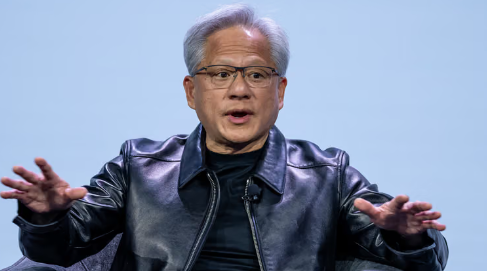
The sell-off has placed renewed attention on Nvidia’s global influence, including its role in the emerging AI infrastructure being built across Africa.
The American company provides the accelerated-computing platform behind Cassava Technologies’ operating AI factory in South Africa and planned expansion into Nigeria, Kenya, Egypt and Morocco.
That makes the controversy relevant beyond Wall Street. Nvidia’s chips and software are central to African efforts to build local computing capacity, process sensitive data within national borders and reduce dependence on data centres located outside the continent.
According to Reuters, Nvidia shares fell by more than 6% on Tuesday after declining 4.3% on Monday, putting the company on course to erase more than $470 billion from its market value in two sessions.
The decline followed allegations concerning Huang’s relationship with a Chinese businesswoman whom US authorities are said to have identified as a Chinese intelligence asset.
For now, the allegation has not been independently verified. China’s foreign ministry has rejected the espionage claims as groundless.
Trump confirms FBI scrutiny as Nvidia begins its own investigation
Trump said on Monday that the Federal Bureau of Investigation was looking into the matter.
“I know the FBI is looking into it,” Trump said, adding that he believed Huang would “be in good shape.”
The president said Huang had told him that he did not know the woman was allegedly connected to Chinese intelligence.
Nvidia’s board had already announced an independent investigation following reports that its founder and chief executive might have been targeted by a foreign intelligence operation.
The committee of independent directors, supported by outside legal counsel, will supervise the investigation.
The company said it had no reason to believe that either American national security or Nvidia’s confidential information had been compromised.
“The Board has confidence in Jensen and his leadership team and will provide further updates as appropriate,” Nvidia said in its official statement.
Huang has acknowledged being unfaithful to his wife and apologised to his family, employees, partners and shareholders. He said he would cooperate fully with the board’s investigation.
The inquiry does not establish wrongdoing by Huang, and there has been no official finding that Nvidia technology or sensitive information was transferred through the relationship.
New chip-shipment allegations deepen Nvidia’s market losses
The latest share-price decline followed a report that the relationship helped facilitate at least $7.5 billion in Nvidia-chip shipments to Chinese companies.
The report alleged that a network of companies in China and Singapore helped obtain and route approximately 240,000 Nvidia H100, H200 and A100 processors into China.
Some of those chip models are subject to American export restrictions intended to limit China’s access to advanced computing technology.
Nvidia and several companies named in the underlying report had not responded to its requests for comment at the time of publication.
The controversy has intensified questions about Nvidia’s corporate governance, its compliance with US export controls and the company’s reliance on Huang’s leadership.
Huang owns approximately 3.6% of Nvidia and has become one of the most recognisable business leaders behind the global AI boom.
The market reaction also allowed Microsoft to overtake Nvidia as the world’s second-most valuable listed company for the first time since June 2025.
Nvidia’s direct connection to Africa’s AI expansion
Nvidia’s exposure in Africa extends beyond the sale of individual processors.
Cassava Technologies, founded by Zimbabwean billionaire Strive Masiyiwa, is the first Nvidia Cloud Partner headquartered in Africa.
Cassava has deployed an Nvidia-powered AI factory in South Africa and identified Nigeria, Kenya, Egypt and Morocco as its next expansion markets. The company wants to create a continent-wide network offering computing power to governments, businesses, researchers and technology developers.
The South African facility gives customers access to high-performance computing without requiring their data to be processed outside the continent.
Cassava has said it ultimately aspires to deploy between 12,000 and 13,000 graphics processing units across Africa. However, the final rollout will depend on demand, investment and available data-centre capacity.
Nvidia separately said Cassava’s wider AI-factory investment across the continent could reach $720 million. That figure is a potential investment ceiling, not an amount already spent or formally allocated equally among the five countries.
No evidence of disruption to African deployments
There is currently no indication that the FBI scrutiny, Nvidia’s internal investigation or the company’s falling share price has delayed Cassava’s operations in South Africa or its planned expansion into the other four African countries.
A decline in Nvidia’s market capitalisation also does not mean the company has lost the equivalent amount in cash. It reflects the reduction in the combined market value of its listed shares.
The immediate consequence is therefore concentrated among Nvidia’s investors and in the heightened regulatory scrutiny facing the company.
However, the episode demonstrates the extent to which Africa’s developing AI infrastructure depends on a small group of powerful American technology suppliers.
For Cassava and its customers, Nvidia remains the provider of the processors, software and technical architecture supporting the planned network.
Any eventual restrictions affecting Nvidia’s exports, corporate leadership or global partnerships could consequently carry implications beyond the United States. For now, however, there is no verified evidence that Africa’s Nvidia-powered projects have been affected.
Source: Africabusinessinsider