Peru and Thailand Sign Free Trade Agreement, Expanding Market Access to 94% of Tariff Line
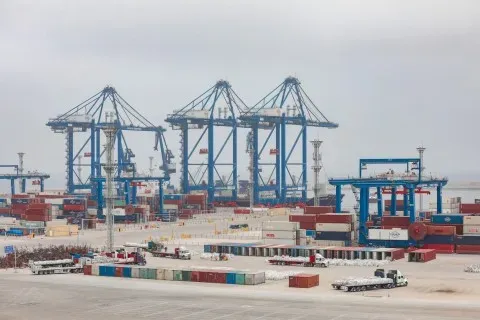
Peru and Thailand formally sealed a bilateral free trade agreement Thursday in Shenzhen, China, on the final day of the APEC Economic Leaders’ Summit, converting years of stop-and-start negotiations into a legally binding instrument that could reshape the commercial relationship between South America and Southeast Asia.
A Decade of Talks, One Signature
Peruvian President Keiko Fujimori and Thai Prime Minister Anutin Charnvirakul witnessed the ceremony as Peruvian Foreign Trade and Tourism Minister Rogers Valencia and Thai Deputy Prime Minister and Commerce Minister Suphajee Suthumpun signed the pact. “After 10 years of negotiation, Peru and Thailand finally signed the free trade agreement,” Fujimori told those gathered at the ceremony.
The road to this agreement reaches back to 2013, when both governments launched — and ultimately failed to advance — a comprehensive trade pact. Those talks stalled and sat dormant for over a decade before both sides resumed negotiations in mid-2024. Two rounds later, on December 22, 2025, they declared a substantial conclusion to the process. The ceremony in Shenzhen turned that technical milestone into a signed treaty.
Broader Market Access for Peruvian Goods
Peru and Thailand have maintained a partial trade protocol since 2011. Under that framework, 66% of Thai tariff lines already carried preferential rates for Peruvian goods. The new agreement lifts that figure to 94%, meaning most Peruvian products — from agro-industrial commodities to minerals — will now enter Thailand on more favorable terms once ratification clears both legislatures. The pact also adds new chapters on trade in services, intellectual property, and the temporary entry of business personnel, areas not covered by the original protocol.
What Peru Actually Exports to Thailand
Peru’s export profile toward Thailand is narrow but expanding. Peruvian shipments to Thailand totaled US$119.2 million in 2025, led by frozen giant squid at US$67 million — roughly 56% of all exports to the country — alongside fresh blueberries at US$12.5 million, grapes, avocados, zinc, and quinoa. All of them, particularly the perishables, stand to benefit from reduced duties, though logistics costs — specifically the need for cold-chain transshipment through East Asian and the broader South American market.
Ratification Ahead, Benefits Not Yet Guaranteed
Thursday’s signing did not put the agreement into effect. Congressional bodies in both Lima and Bangkok must ratify the text before its terms become operational. Sources in Thailand indicate that Thai exporters do not expect the agreement to enter into force before 2027, a legislative calendar that likely tracks Peru’s own parliamentary timeline as well.
The bilateral trade balance remains heavily skewed against Peru. Thai exports to the country — vehicles, machinery, appliances, and electronics — dwarf Peruvian shipments in the opposite direction. For the FTA to close that gap, Peru’s private sector will need active commercial strategies in a market where Peruvian brands remain largely unknown. The signed agreement is the door; walking through it is a separate undertaking.
Source: Latintimes