Dollar gains as U.S. blockades Iran ports after failure of peace talks.
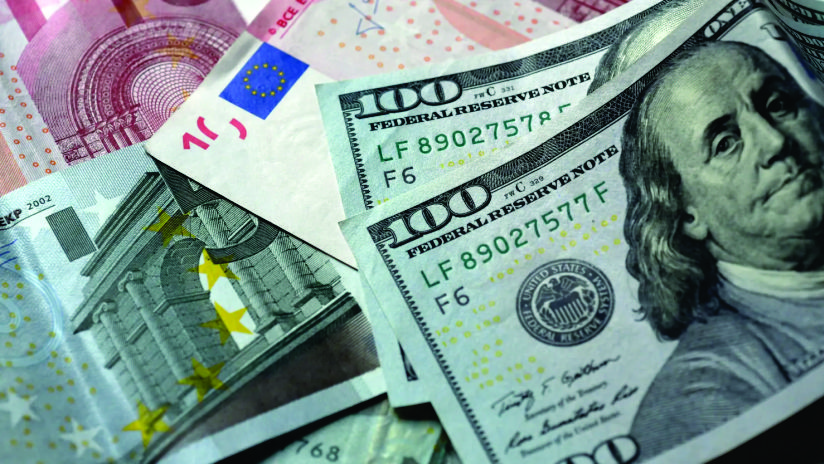
The dollar climbed on Monday after peace talks between the U.S. and Iran broke down and as the U.S. Navy began to blockade Iranian ports, while the Hungarian forint rallied after the center-right Tisza party defeated Viktor Orban in a landslide election victory.
U.S. crude oil rose nearly 7% to $103.27 a barrel and Brent rose to $101.73 per barrel, also up 7%, in reaction to the U.S. military’s naval blockade, which went into effect at 10 a.m. ET. The blockade will be “enforced impartially against vessels of all nations” entering or leaving Iranian ports in the Persian Gulf and the Gulf of Oman, U.S. Central Command said, putting a recent ceasefire in jeopardy.
The dollar index, which measures the greenback against a basket of currencies including the yen and the euro, rose 0.16% to 98.88, with the euro down 0.18% at $1.1698. The greenback is coming off its biggest weekly percentage drop since mid-January.
“The market went into the weekend optimistic, the dollar finished near its lows, so the short-term market was leaning the wrong way,” said Marc Chandler, chief market strategist at Bannockburn Capital Markets in New York. “Given that we could be on the verge of a major escalation, I’d say the market is showing a lot of restraint.” The risk-sensitive Australian dollar weakened 0.21% versus the dollar to $0.7045 and the New Zealand dollar edged down 0.1% versus the greenback to $0.5827.
The war in the Middle East has pushed crude prices up about 40% since the end of February, when the war began, heightening concerns about inflation and lower global growth, a combination known as stagflation.
The dollar has tended to gain when tensions between Iran and the U.S. have risen, given its status as a safe haven and the relative insulation of the U.S. to imported energy-price inflation. Against the Norwegian krone, the dollar weakened 0.47% to 9.488 and the Canadian dollar strengthened 0.01% versus the greenback to C$1.383 per dollar, with both currencies sensitive to movements in crude prices.
“Beneath the surface, today’s price action looks less risk-led and more driven by relative terms of trade shifts,” said Goldman Sachs analyst Teresa Alves in a note.
The Hungarian forint surged after incumbent nationalist leader Viktor Orban lost power to Peter Magyar’s Tisza party in Sunday’s national election after 16 years in office. The currency jumped 2.85% versus the dollar to 311.51 after touching 309.34, its strongest level since February 2022. “The polls showed Orban was going to lose, that he actually did lose and conceded is a good sign, but this is not like a shift to some kind of left position,” said Chandler.
Against the yen, the U.S. dollar was up 0.28% to 159.74 as yields on Japan’s benchmark 10-year government bonds advanced 3.2 basis points to 2.496%, the highest in nearly three decades.
Bank of Japan Governor Kazuo Ueda said on Monday that economic and price developments were moving roughly in line with the bank’s forecasts, but called for vigilance over the impact of the conflict in the Middle East.
Source: cnbc